

¿Cómo deberían los cristianos interactuar de manera responsable con los avancestecnológicos?
Christians should approach technological advancements with a critical and informed perspective, recognizing that technology can be amoral, moral, or immoral. Some innovations function as neutral tools whose impact depends on their use, while others are designed with explicitly beneficial or harmful intentions. The following are fundamental principles for ethical interaction with technology from a Christian perspective.
A Theological Vision of Creation and Technology
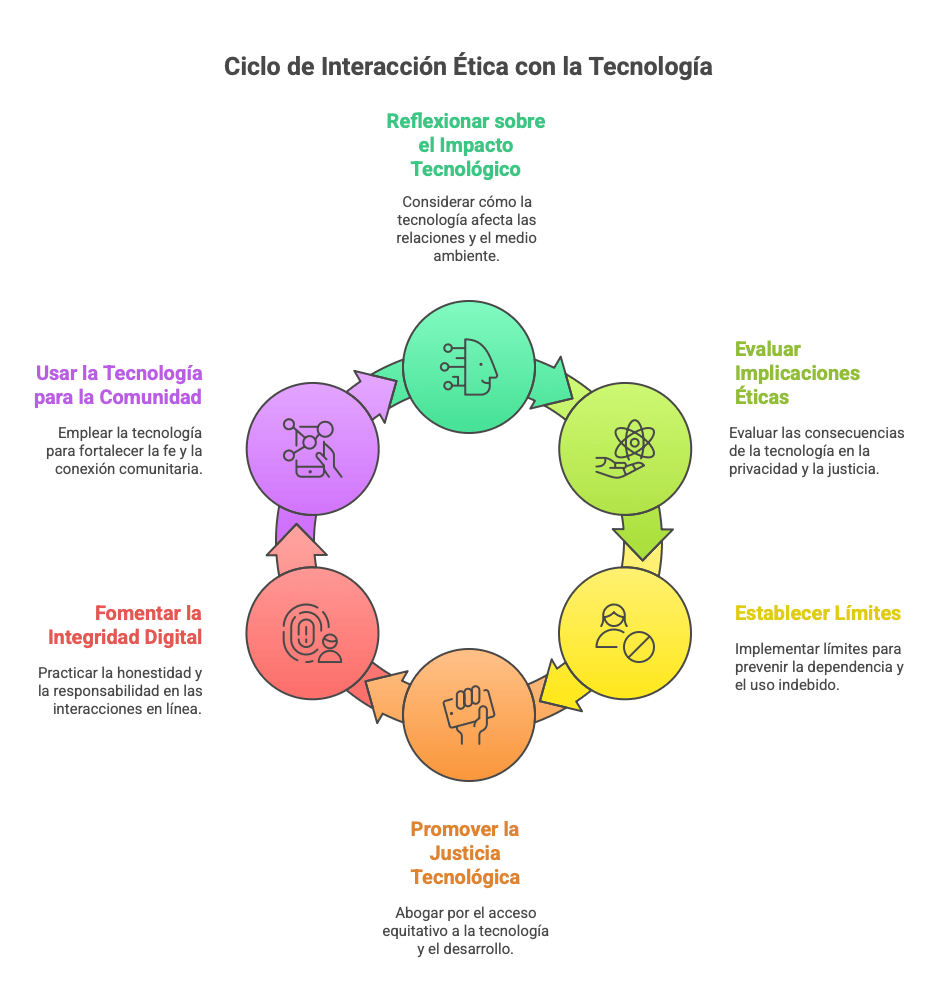
The Christian doctrine holds that God has endowed humanity with creativity and intelligence to develop science and technology (Genesis 1:28). As an extension of humanity’s capacity to "cultivate" and "keep" creation, technology should be aligned with the purpose of glorifying God and serving humanity. Its responsible use implies contributing to the common good and respecting human dignity. However, it is essential for Christians to reflect on how each technological innovation affects humanity’s relationship with God, with others, and with the environment. Additionally, the long-term impact of technology on culture, ethics, and society as a whole must be considered.
Ethical and Prudent Use of Technology
The Bible emphasizes the importance of wisdom and prudence in decision-making (Proverbs 2:6-11). An ethical approach to technology requires a critical evaluation of its implications, including its impact on privacy, mental health, and the spread of false information. Some technologies, such as algorithms designed to induce addiction or weapons of mass destruction, have an inherently problematic nature. Christian responsibility involves mitigating their harmful effects and promoting a use that prioritizes collective well-being. It is essential to develop a critical mindset that allows discernment between a use that promotes justice and one that perpetuates inequality and abuse. Furthermore, Christian ethics must consider the environmental impact of technological innovations and the responsibility of believers in preserving creation.
Recognition of Technological Limits and Discernment
Despite its benefits, technology cannot address the spiritual and existential needs of human beings, nor can it replace faith in God (Psalm 20:7). A prudent use of technology involves recognizing its limitations and setting appropriate boundaries. This may include consciously managing time on digital platforms and establishing safeguards to prevent dependency and algorithmic manipulation. Furthermore, it is essential to understand that technological progress does not always equate to moral progress and that unrestricted advancement can lead to unforeseen negative consequences. Digital ethics education should be a priority for the Christian community so that individuals can use technology with discernment and responsibility.
Promoting Justice and Technological Equity
The Christian commitment to justice and charity also extends to the digital realm. This includes respectful interactions online, concern for the digital divide that excludes certain sectors of the population, and the promotion of technological solutions that benefit the most vulnerable. Christian ethics must go beyond personal benefit and advocate for equitable and accessible technological development for all. It is essential to question unequal access to technology and support policies that promote digital inclusion in marginalized communities. Furthermore, Christians should encourage the use of technology to strengthen civic participation and the defense of human rights in an increasingly digital world.
Integrity and Responsibility in the Digital Age
Anonymity and digital accessibility can foster practices such as misinformation, fraud, and the exploitation of personal data. Ephesians 4:25 exhorts Christians to act with truthfulness and honesty. This means being mindful of the content shared, protecting privacy, and rejecting the use of technology for manipulation or harm. Online integrity is just as important as integrity in everyday life and should be reflected in all digital interactions, from communication to information consumption and the protection of sensitive data. Cybersecurity education and awareness of digital rights should be integral to Christian formation in the digital age.
Using Technology to Strengthen Community and Faith
Technological development can lead to isolation if not handled carefully. However, it can also be a powerful tool for strengthening fellowship within the Church and with society. Christians can use technology for evangelism, Bible study, Christian education, and organizing charitable initiatives, thus fostering a digital community rooted in spiritual values. Additionally, it is important to consider how technology can aid theological formation by providing access to resources and training for believers worldwide. Technology should be used to facilitate connections between faith communities and encourage collaboration in projects that promote justice and love for others.
Conclusion
Christianity calls for an ethical and thoughtful use of technology, grounded in biblical principles that safeguard human dignity, promote the common good, and glorify God. To achieve this, it is essential to maintain a balance between innovation and responsibility, ensuring that technological advancements contribute to building a more just and equitable world aligned with Christian values. Technology should not become an end in itself but rather a means to facilitate the Christian mission of serving, educating, and transforming society in accordance with the principles of the Gospel. As technology evolves, the Church must adapt and develop strategies that enable its use for the benefit of humanity, ensuring that its applications remain consistent with the Christian vision of justice, love, and truth.